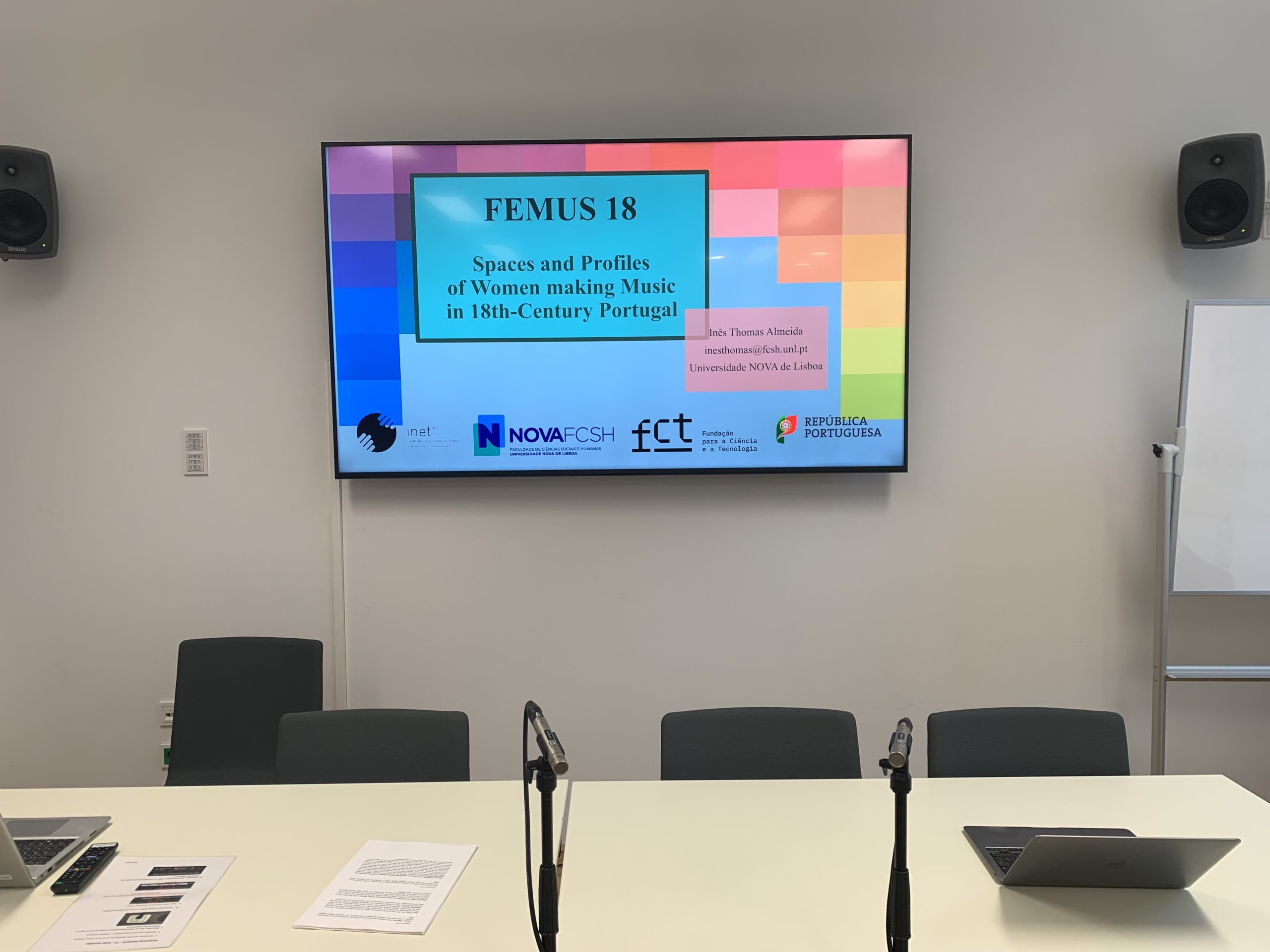
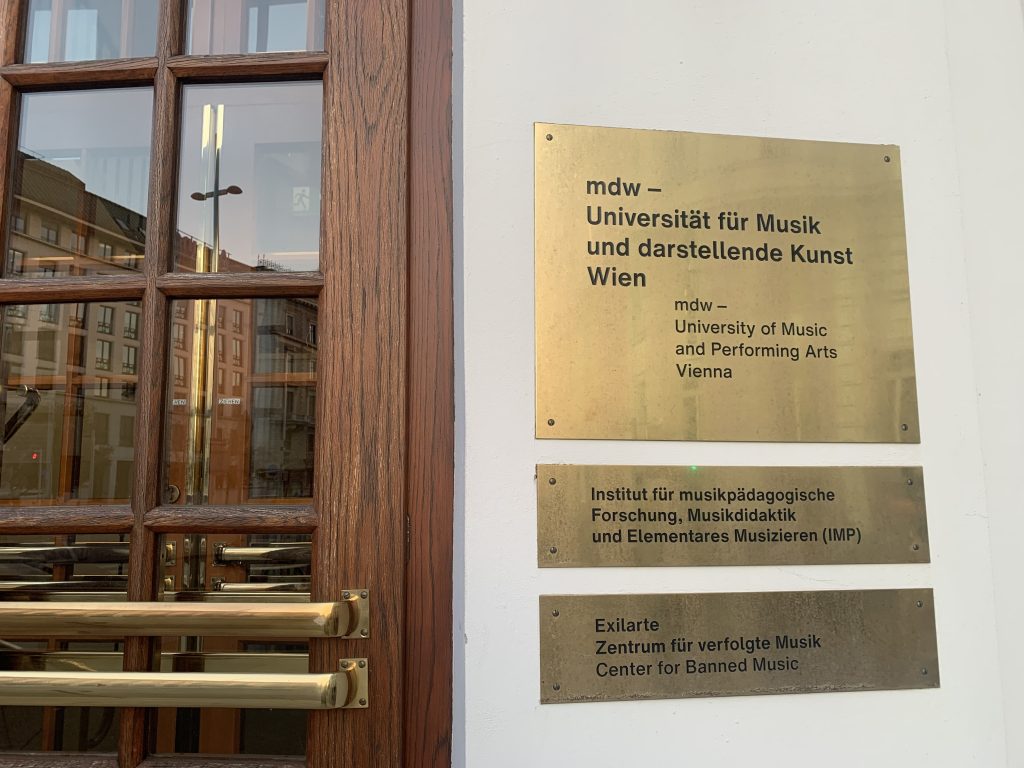
In November 2024, I had the pleasure of presenting my research project FEMUS 18 at the international workshop Intersektionale Perspektiven auf die Musikgeschichte des 18. Jahrhunderts. The event took place at the University of Music and Performing Arts Vienna (MDW).
Organized by Prof. Melanie Unseld (MDW), the workshop gathered scholars working on gender and intersectionality in 18th-century music. Berta Joncus (Goldsmiths, University of London) presented Abolition and its Legacies: Performances and Politics. Julia Ackermann (MDW) shared her research on music education in the de Caix family. her project is part of Musikerfamilien: Konstellationen und Konzepte, funded by the FWF (Austrian Science Fund).
The international workshop Intersektionale Perspektiven auf die Musikgeschichte des 18. Jahrhunderts created a dynamic space for critical exchange. It focused on new research projects that deal with intersectional and gender-related questions about 18th century music culture in Europe.
I was honored to present my research project FEMUS 18 – Spaces and Profiles of Women Making Music in 18th-Century Portugal and engage in a fruitful discussion with fellow researchers.
A different kind of presentation
Instead of presenting a formal paper, I led a 2.5-hour workshop to students and researchers of the Institute for Musicology. The aim was to introduce the project’s central questions, methodological approaches, and source materials. In addition, I reflected on the broader historiographical implications of researching women’s music history.
I began by tracing the origins of FEMUS 18, explaining how it emerged from my doctoral research. I described the path toward project funding and outlined its relevance within current scholarly debates.
Where women made music
A central part of FEMUS 18 is the study of five key spaces where women engaged in music in 18th-century Portugal: convents and religious settings, theatres (both public and courtly), aristocratic settings, private homes, and outdoor public spaces such as markets and streets.
Each of these spaces shaped the kind of music women could perform. They also affected how visible their work was to others. We explored examples from archives that show how spatial context shaped the roles women could occupy as musicians. For instance, archival evidence suggests that convents offered both restrictions and opportunities; meanwhile, domestic music-making could serve as both a pastime and a form of social performance.
Sources, methods, and examples
I introduced some of the primary sources used in the project—manuscripts, travel accounts, and official documents—and discussed methodological challenges. I spoke about the difficulties of working with fragmentary sources, and the need to read them with care. This is even more important when reconstructing marginalized histories. To make this concrete, I presented several case studies. These included women’s musical activities documented in letters, diaries, and records, emphasizing their diverse roles and repertoire.
Looking to the present
We concluded with a discussion on the implications of historical gender asymmetries for present-day musicology, engaging in a thoughtful exchange about the responsibility of scholarship in challenging persistent inequalities and reimagining historiographical narratives.
The workshop offered an invaluable opportunity not only to share the conceptual underpinnings of FEMUS 18, but also to engage in dialogue with emerging scholars and established colleagues working on parallel questions across Europe. The interdisciplinary perspectives present at the workshop enriched my understanding of the broader landscape of research on gender and music in the 18th century.
I am grateful to Prof. Melanie Unseld for the invitation and warm welcome, and to all participants for their insights and stimulating questions. Events like this are a reminder of the value of collaborative thinking and the continued urgency of bringing women’s stories into the centre of scholarly attention.
Leave a Reply